About NCHEP
The North Carolina Homeless Education Program (NCHEP) is the Education for Homeless Children and Youths Program for the state of North Carolina. In January 2009, the North Carolina Department of Public Instruction contracted with SERVE at UNC Greensboro.
NCHEP is dedicated to ensuring that all children and youth experiencing homelessness have access to the public education to which they are entitled under the federal McKinney-Vento Education of Homeless Children and Youth Assistance Act. NCHEP works toward this goal by ensuring that North Carolina’s state policies comply with federal law, by providing technical assistance to North Carolina’s local homeless education liaisons, and by providing informational and awareness materials to educators and other interested community members throughout North Carolina. In order to gauge programming needs, NCHEP conducts a Statewide Assessment on an annual basis. During the 2024-2025SY, the assessment was completed by 115 traditional LEA homeless liaisons. The Statewide Assessment can be viewed HERE.
The following data charts and graphs are generated from state-level data. Homeless children and youth are highly mobile and may attend school in more than one school district; therefore, at the state level, there may be some duplication across Local Education Agencies. A PDF of NCHEP’s historical data can be accessed HERE.
Note: Data includes all enrolled homeless children and youth in grades PK – 12. All homeless student counts in the charts are considered “duplicated” counts, meaning one or more students may be identified and served by one or more school districts.
| School Years | Student Count |
|---|---|
2015-2016SY | 26339 |
2016-2017SY | 29297 |
2017-2018SY | 28877 |
2018-2019SY | 34725 |
2019-2020SY | 27044 |
2020-2021SY | 22644 |
2021-2022SY | 30247 |
2022-2023SY | 35282 |
2023-2024SY | 37197 |
2024-2025SY | 39248 |
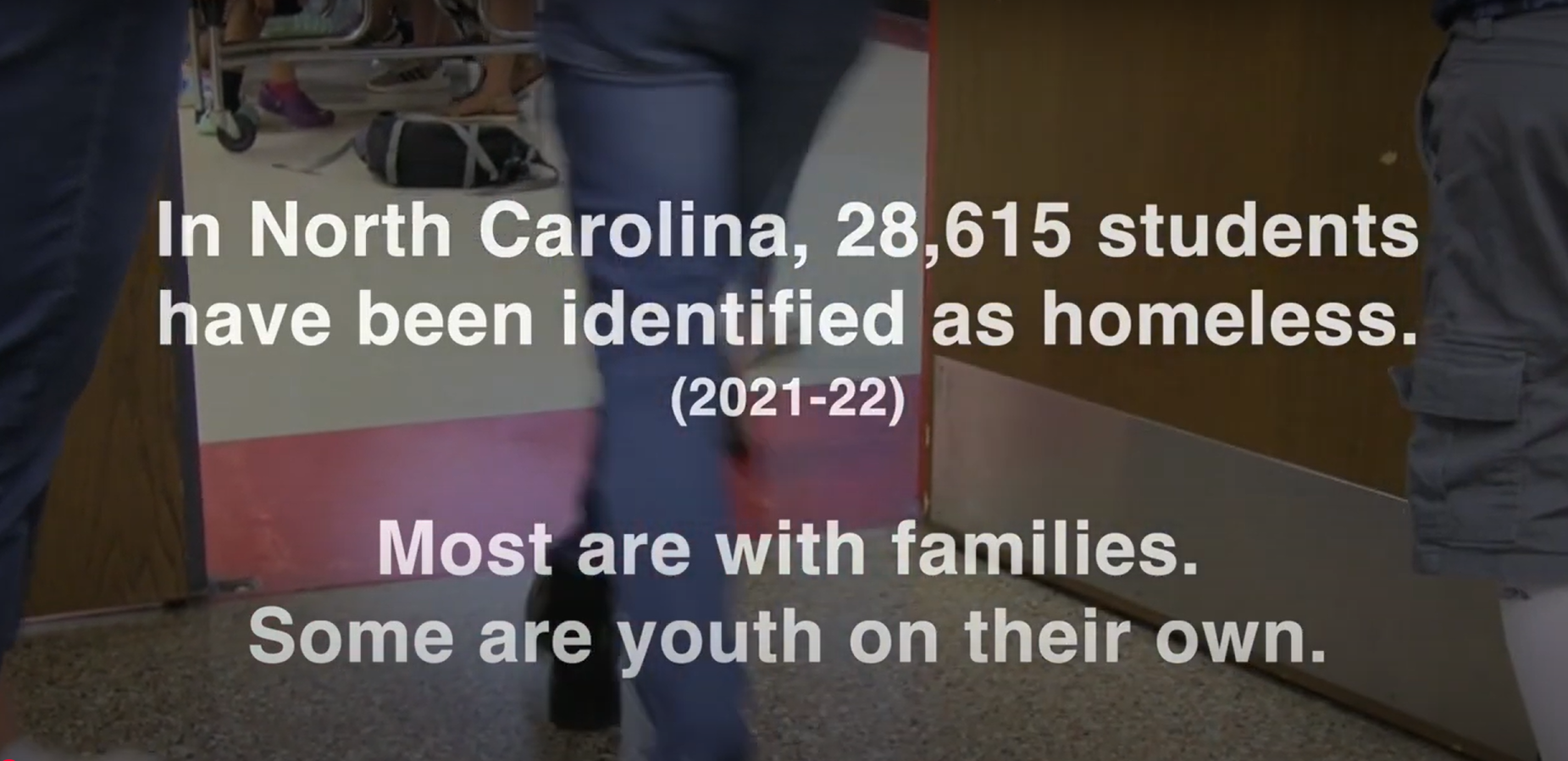
During the 2024-2025 school year, North Carolina public schools reported 39,248 students enrolled in grades PK-12 as experiencing homelessness. Student identification increases were attributed to Hurricane Helene, which affected the western part of the state. The housing instability faced by students experiencing homelessness is associated with a range of acute needs, including transportation, food insecurity, health care, and emotional and mental health. Homeless liaisons identify homeless children and youth, ensure school access and stability, provide direct services, and coordinate with community agencies to meet basic needs. Their dedication to the work in NC has provided an increase in students who receive the services for which they are eligible under the McKinney-Vento Act.
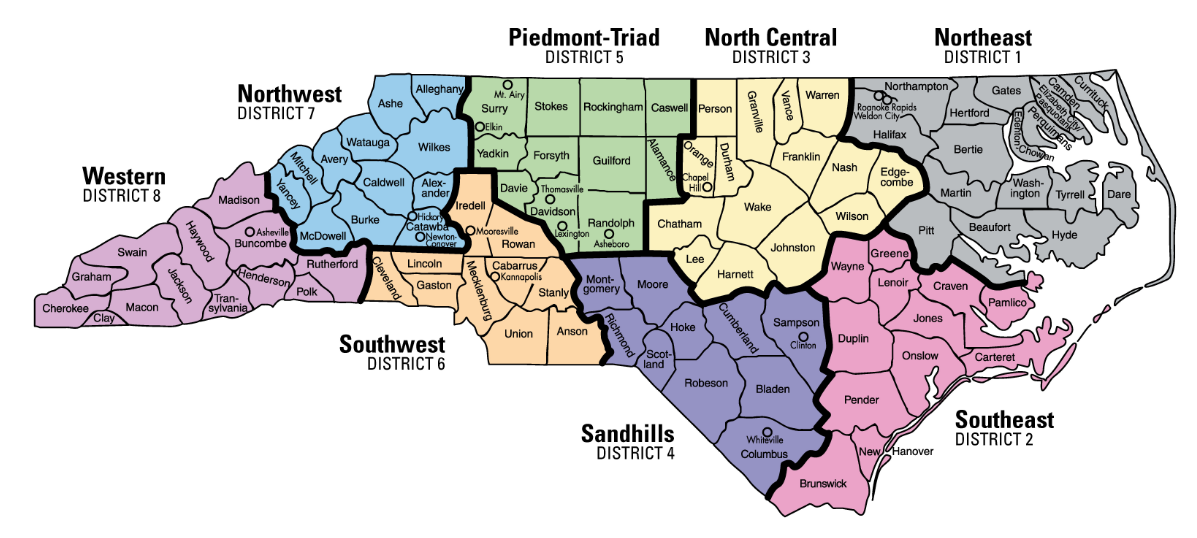
While the majority of NC students experiencing homelessness live in the more populous regions of the State, both urban and rural regions face unique challenges in identifying and serving the educational needs of these students.
| Region | Percentage |
|---|---|
Northeast | 3% |
Southeast | 7% |
North Central | 27% |
Sandhills | 6% |
Piedmont-Triad | 14% |
Southwest | 26% |
Northwest | 7% |
Western | 10% |
North Carolina public schools report data for the type of primary nighttime residence used by students based on four categories: doubled-up, shelters and transitional housing, hotels or motels, and unsheltered. The doubled-up category includes students who are sharing housing with others due to loss of housing, economic hardship, or a similar reason. The shelters and transitional housing category includes all types of emergency, family, youth, and transitional shelters. The hotels or motels category includes students residing in hotels or motels due to a lack of alternative, adequate housing. The unsheltered category includes students staying in substandard housing, cars, parks, abandoned buildings, or other places not meant for humans to live. It also includes students staying in temporary trailers and campgrounds due to inadequate alternative housing.
Historically, the percentage of homeless students living in a particular type of housing remains relatively stable, with students who are doubled-up composing approximately 69% of all students experiencing homelessness at the point of identification by the homeless liaison. This aligns similarly with data from across the country.
Shelters are not available in all areas of the state. They may be full and have stay limits for families, which contributes to the large number of doubled-up identifications. When living in a double-up situation, the family or youth may be confined to one room or area of the house, live in fear of being kicked out, and feel additional stress due to the overcrowding of the environment. Students experiencing homelessness living in doubled-up situations often lack sufficient sleep and a space to study, which leads to them being unable to perform well in school.
| Housing Type | Percentage |
|---|---|
Doubled Up | 69% |
Hotels / Motels | 18% |
Sheltered | 7% |
Unsheltered | 6% |
| School Years | Student Count |
|---|---|
2015-2016SY | 26339 |
2016-2017SY | 29297 |
2017-2018SY | 28877 |
2018-2019SY | 34725 |
2019-2020SY | 27044 |
2020-2021SY | 22644 |
2021-2022SY | 30247 |
2022-2023SY | 35282 |
2023-2024SY | 37197 |
2024-2025SY | 39248 |
Unaccompanied Homeless Youth (UHY) are those children and youth who experience homelessness (lack a fixed, regular, and adequate residence) and are unaccompanied (not in the physical custody of a parent or guardian). Approximately 8% of the students experiencing homelessness during the 2024-2025 school year were UHY in NC. Homeless liaisons are conducting targeted outreach to assist in the identification of UHY, which is the first step in ensuring they receive the educational support needed to succeed.
Early identification of 0-5-year-old siblings experiencing homelessness is crucial as it allows families to have equal access to early childhood programs and other valuable services. Identification in the early years can also reduce trauma-related challenges, support family stability, and strengthen family resilience.
| School Years | Student Count |
|---|---|
2020-2021SY | 1381 |
2021-2022SY | 1918 |
2022-2023SY | 2327 |
2023-2024SY | 2550 |
2024-2025SY | 2071 |
Homeless Liaisons Navigate Challenges in North Carolina
Every school district nationwide has homeless liaisons, the mostly unsung champions for students experiencing homelessness. North Carolina has a well-trained cadre of homeless liaisons serving students and their families. The video takes you across the state to see and hear the homeless liaisons in action.
Caring Schools Make the Difference
Family and youth homelessness come in many forms. Schools are a constant island of security. In this video, courageous moms and youth share their stories with the hope that the viewers will learn more about the challenges of homelessness and the importance of school officials who help however possible.